






As Prime Minister Balendra Shah prepares to lead Nepal’s delegation to the United Nations General Assembly in New York, the devastating Bhotekoshi flood could place Nepal’s climate vulnerability, reconstruction needs and Himalayan risks before the world at a critical moment.
KEY FACT: The latest comparable Global Carbon Budget data puts Nepal at about 0.05% of global annual CO₂ emissions in 2024. Nepal has also cited “around 0.04% of global carbon emissions” at the United Nations. The figures differ by dataset, year and definition.
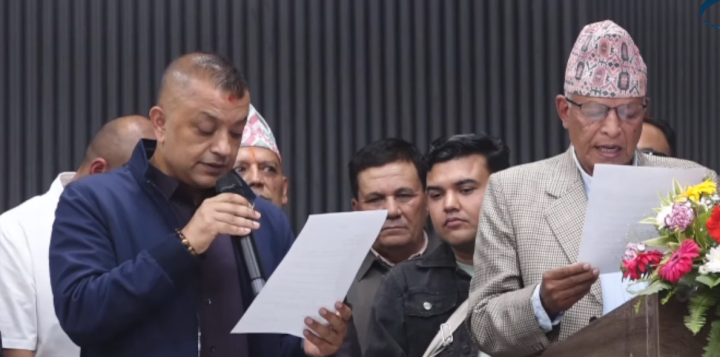
KATHMANDU : Prime Minister Balendra “Balen” Shah is preparing for what could become one
of the most consequential international appearances by a Nepali prime minister
in recent years, as the government moves ahead with plans for him to lead
Nepal’s delegation to the 81st United Nations General Assembly in New York.
The
government had initially planned to send Foreign Minister Shisir Khanal to
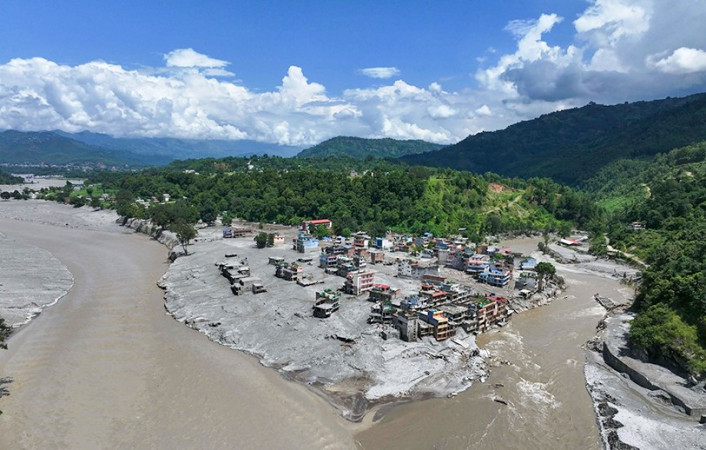
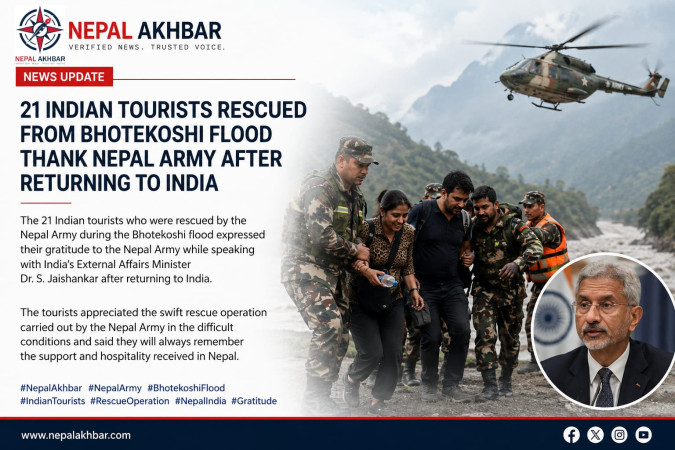
represent Nepal. But following the catastrophic Bhotekoshi flood of August 26
and growing calls for Nepal’s climate concerns to be presented at the highest
political level, preparations have moved toward Shah leading a small delegation
to New York. The visit would also be Shah’s first foreign visit since becoming
prime minister.
The
timing could hardly be more significant.
The UN General Assembly’s 81st session opens in September, with the high-level General Debate later in the month. For Nepal, the gathering offers far more than an opportunity for another diplomatic speech. It provides a global platform from which the country can make a direct argument about the growing imbalance between those responsible for global warming and those increasingly paying its price.
Nepal emits very little, but faces enormous climate risk
Nepal’s central climate argument is striking:
According
to the latest data compiled by Our World in Data using the Global Carbon
Budget, Nepal emitted around 18.8 million tonnes of CO₂ in 2024, representing
about 0.05% of global annual CO₂ emissions. Nepal’s share of historical global
CO₂ emissions since 1751 is even smaller, at roughly 0.01%.
Nepal
itself recently used an even lower figure at the United Nations. During a
General Assembly meeting in July 2026, Nepal’s representative said the country
contributes “around 0.04% of global carbon emissions” while remaining highly
vulnerable to climate change.
The
difference between 0.04% and 0.05% is largely a matter of dataset, year and
definition. For current reporting, “around 0.05% of annual global CO₂
emissions” is the more precise formulation based on the latest comparable
Global Carbon Budget data.
Total
greenhouse-gas emissions are a different measurement. Broader estimates have
placed Nepal’s contribution to global greenhouse-gas emissions at around 0.1%.
CO₂ and total greenhouse-gas emissions should therefore not be presented as the
same statistic.
Whichever measurement is used, the broader conclusion remains unchanged: Nepal’s contribution to global warming is extremely small. Yet its exposure to the consequences is anything but small.
Bhotekoshi has changed the context of the UN visit
The
August 26 disaster has devastated communities along the Bhotekoshi-Trishuli
river system, affecting Rasuwa, Nuwakot and downstream districts. Search,
rescue and recovery operations have continued while authorities assess the
destruction to homes, roads, bridges, settlements and hydropower
infrastructure.
Preliminary
estimates have suggested that reconstruction and rehabilitation could require
several billion US dollars, placing an extraordinary burden on a comparatively
small economy. A detailed post-disaster needs assessment will be essential
before the final cost is known.
That
gives Nepal’s climate argument at the UN a powerful economic dimension. A
country responsible for only a tiny fraction of global emissions may be forced
to devote a significant share of national resources to rebuilding after a
single catastrophic event.
That is precisely where the concepts of climate justice and loss and damage become relevant.
Nepal can move the conversation from aid to climate justice
Traditionally,
major disasters in countries such as Nepal have been followed by appeals for
humanitarian assistance, grants and reconstruction support. The climate debate
has increasingly changed that conversation.
Developing
countries argue that nations which have contributed least to historical global
warming should not be expected to shoulder the full financial burden of
increasingly severe climate impacts.
“Nepal has |
For
Nepal, the strongest position at the UN would therefore not simply be to ask
for sympathy. It would be to argue that the international climate-finance
system must respond fairly to the growing losses faced by vulnerable,
low-emitting countries.
Nepal has already moved to seek support through international loss-and-damage mechanisms following the Bhotekoshi disaster. Shah’s presence in New York would not automatically unlock financing, because funding decisions are made through formal institutional processes. But high-level diplomacy could increase international attention, encourage bilateral partners and development institutions to support Nepal, and reinforce the country’s case for faster access to climate finance.
The Himalayas could become central to Nepal’s message
Nepal
also has an opportunity to make the case that climate vulnerability is not
limited to islands threatened by rising seas or countries suffering drought.
The Hindu Kush Himalaya is undergoing rapid physical change.
Research
by the International Centre for Integrated Mountain Development (ICIMOD) has
documented accelerating glacier loss across the region. Shrinking glaciers and
rapidly changing mountain conditions can increase risks including glacial-lake
outburst floods, landslides, unstable slopes, altered river flows and
water-security problems.
This
gives Nepal an opportunity to push for the Himalayas to receive greater
international attention in climate negotiations. The mountains are not only
Nepal’s concern: Himalayan snow and ice feed major river systems on which large
populations across Asia depend.
Nepal could therefore use the UN platform to advocate for expanded glacier monitoring, satellite surveillance, transboundary information sharing, high-altitude weather stations and stronger early-warning systems. These are practical areas where international cooperation could save lives.
Was the Bhotekoshi flood directly “caused by climate change”?
It would be scientifically stronger for Nepal Akhbar not to state simply that climate change caused the August 26 flood. Available reporting and scientific assessments point to an immediate physical trigger involving a major glacier, ice-and-rock or mountainside collapse that released enormous material and water into the river system. Scientists are continuing to investigate the precise chain of events.
Climate
change nevertheless forms an important part of the wider risk environment. The
Himalayas are warming, glaciers are retreating and mountain slopes, frozen
ground, glacial lakes and river systems are changing. The responsible
formulation is therefore that climate change is increasing and altering
Himalayan risks, while the exact degree to which global warming contributed to
this particular event requires scientific attribution.
That distinction strengthens rather than weakens Nepal’s argument because it ensures the country’s case is based on evidence.
An opportunity to seek resilient reconstruction - not simply rebuild what was lost
Another
major message Shah could take to New York concerns the kind of reconstruction
Nepal needs. Simply rebuilding the same bridges, hydropower facilities, roads
and settlements in the same vulnerable locations could leave the country
exposed to another disaster.
The
Bhotekoshi flood has demonstrated that infrastructure designed using historical
river behaviour may no longer be sufficient for a rapidly changing Himalayan
environment.
Nepal
could seek international financing and technical assistance for:
- ·
climate-resilient
roads and bridges;
- ·
safer
reconstruction and relocation of highly exposed communities;
- ·
upgraded
Himalayan flood and glacier-monitoring systems;
- ·
stronger
Nepal-China transboundary early-warning mechanisms;
- ·
climate-resilient
hydropower design;
- ·
satellite
and remote-sensing capacity;
- · emergency communications systems; and disaster insurance and financial protection for vulnerable communities.
This would transform Nepal’s appeal from short-term disaster relief into a long-term national resilience programme.
A diplomatic opportunity for Shah
The
visit could also be significant for Shah personally. His first major
international appearance as prime minister would come not during a routine
bilateral visit but at one of the world’s most visible diplomatic gatherings,
while Nepal is dealing with an extraordinary national disaster.
That
creates both an opportunity and a test.
A
strong speech could attract international attention. Bilateral meetings with
governments, multilateral development banks, UN agencies and climate-finance
institutions could produce commitments. But international visibility alone
would not constitute success.
The
real measure would come afterward: How much financing does Nepal secure? What
technology and expertise arrive? Are early-warning systems improved? Are
settlements rebuilt more safely? Are hydropower projects redesigned for new
climate realities?
The strength of Nepal’s international diplomacy will ultimately be measured in outcomes at home.
From a disaster story to a global climate case
For
decades, Nepal has repeatedly told international forums that it contributes
little to global emissions while remaining highly vulnerable to climate change.
This
time, however, the argument is unfolding against the backdrop of destroyed
communities, damaged national infrastructure and a reconstruction burden that
could run into several billion dollars.
That
gives the message unusual urgency.
If
Prime Minister Balendra Shah uses the United Nations General Assembly
effectively, Nepal has an opportunity to turn one of the darkest moments in its
recent history into a broader international case for climate justice,
loss-and-damage financing, resilient reconstruction and protection of the
Himalayan region.
The
objective should not merely be to make the world feel sympathy for Nepal. It
should be to make the world understand that what is happening in the Himalayas
is part of a much larger global problem — and that countries contributing the
least to that problem cannot reasonably be expected to face its consequences
alone.
For Nepal, that could make Shah’s appearance in New York one of the most consequential international appearances by a Nepali prime minister in years.
NEPAL AKHBAR FACT CHECK: Is the 0.04% figure correct?
Verdict: Mostly correct, but context matters.
|
Sources and reference materials:
Kathmandu Post: Government preparations for PM Shah to lead Nepal’s UN
General Assembly delegation.
United Nations: UN General Assembly session and high-level meeting schedule.
Our World in Data / Global Carbon Budget: Nepal CO₂ emissions and global share.
United Nations transcripts: Nepal’s statement citing around 0.04% of global carbon
emissions.
World Bank: Nepal climate vulnerability and broader greenhouse-gas
context.
ICIMOD: Hindu
Kush Himalaya glacier loss, climate risk and mountain-system research.
Fund for Responding to Loss and Damage: Loss-and-damage financing framework and eligibility
context.
Reuters and other major reporting: Bhotekoshi disaster, reconstruction estimates and
continuing scientific investigation.
|
Editorial note: Because
casualty totals, damage estimates and the exact scientific attribution of the
Bhotekoshi disaster may change as official assessments continue, Nepal Akhbar
should verify the latest official figures immediately before publication. |