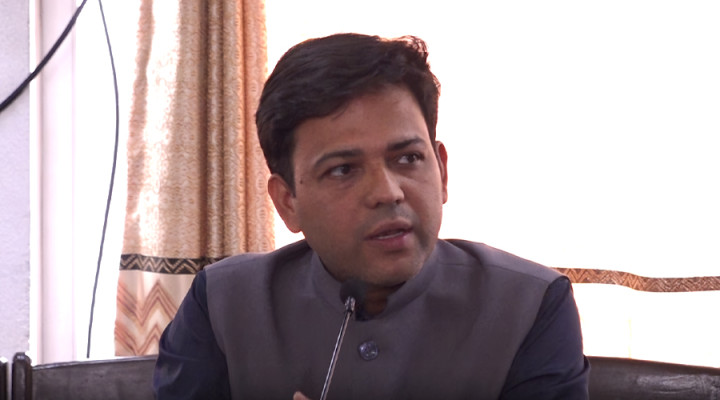







A senior Nepali leader has warned the international community that Nepal is facing devastating consequences from climate change, urging stronger global action, climate justice and international cooperation.
Addressing the United Nations General Assembly, the Nepali leader said Nepal, a country located in the Himalayas, has been experiencing increasingly severe climate-related disasters despite contributing less than 0.1 percent of global greenhouse gas emissions.
The speech highlighted the growing instability of the Himalayan ecosystem as temperatures rise. Melting permafrost and glaciers are increasing the risks of landslides, floods, rockfalls and other cascading disasters.
According to Nepal's preliminary assessment cited in the speech, at least 1,400 people have been confirmed dead and more than 6,000 remain missing, while reconstruction and physical recovery could require resources equivalent to around 10 percent of Nepal's GDP.
The speech stressed that the impact of climate change extends beyond Nepal's borders. Damage from flooding affected areas on both sides of the Nepal-China border, with floodwaters also moving downstream toward India.
Nepal also expressed gratitude to India, China, the United Nations system, humanitarian agencies, charitable organizations and people around the world for their assistance following the disaster.
The Nepali leader called for greater climate financing, emphasizing that vulnerable countries should not be forced into additional debt to rebuild infrastructure destroyed by climate disasters. The speech also called for adequate grant-based support and stronger international mechanisms for addressing loss and damage.
Nepal proposed establishing a “Himalayan Climate Resilience Mechanism” led by Nepal, India and China. The proposal includes sharing satellite data and expertise, monitoring dangerous glacial lakes, strengthening joint early-warning systems and coordinating cross-border disaster response.
The speech concluded with a call for the international community to listen to warnings coming from the “roof of the world” and act before climate disasters become a permanent reality.